7 Apparel Marketing Ideas & Examples to Drive Sales (2026)

I hope you enjoy this blog post. If you want Hello Bar to grow your leads, click here.
Author:
Mansi
Published
January 5, 2026

Table of Contents
If you run a fashion brand today, you are fighting a war on two fronts. On one side, customer acquisition costs (CAC) have skyrocketed. On the other, consumer attention spans have dropped to seconds. The old playbook of “running Facebook ads to a homepage” is burning money.
The winners in the current apparel landscape aren’t just selling clothes; they are engineering “systems” that capture attention, increase average order value (AOV), and retain customers without needing to constantly pay for their attention.
Whether you are managing a luxury house or a streetwear startup, you are likely asking the same question: How do I squeeze more revenue out of the traffic I already have?
This guide isn’t about vague theories. It is a breakdown of 7 specific apparel marketing examples from brands like Asphalte, Ekster, and Pierre Hardy. These companies didn’t just “post content”; they built specific on-site mechanisms to drive growth. Here is exactly how they did it and how you can replicate their apparel marketing strategies.
1. The “Zero-Inventory” Launch: Pre-Selling via Surveys
One of the most dangerous risks in the fashion business is inventory. You guess what people want, you spend capital to make it, and then you pray it sells. But what if you could reverse that cycle?
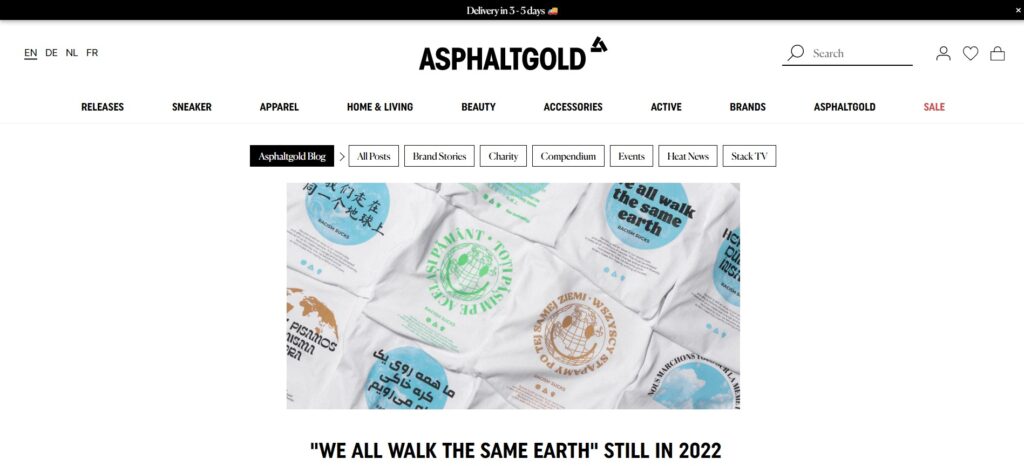
The Asphalte Model: Asphalte, a forward-thinking apparel brand, completely flipped the script. Their business model is built on pre-orders, meaning they only manufacture what has already been sold. This eliminates the “dead stock” problem that kills margins for so many retailers.
But the brilliance of their apparel marketing ideas lies in how they generate demand before the product exists. They use “Product Surveys.”
How It Works: Instead of a standard “Sign up for 10% off” popup, Asphalte engages visitors with a question: “Help us build the perfect sweater.”
They deploy full-screen interstitials that invite the user to co-create the product. Users vote on fabrics, cuts, and colors. At the end of the survey, the user provides their email address to be notified when their version of the product drops.
Why This Scale: According to their Head of Growth, Benjamin Mateo, this strategy generates an average of 4,000 quality leads every month. These aren’t cold leads; they are invested co-creators. When the launch email goes out, conversion rates skyrocket because the customer feels a sense of ownership over the product.
The Lesson: Stop guessing. Use surveys as a lead magnet. You solve two problems at once: you build your email list and you validate your product roadmap before spending a dollar on production.
2. AOV Engineering: The “Buy 2, Get 1” Incentive
Getting a customer to checkout is hard. Getting them to checkout with a larger cart is where the profit lives. Many brands rely on flat discounts (e.g., “20% Off”), but this often devalues the brand equity. A superior strategy is the volume-based incentive.
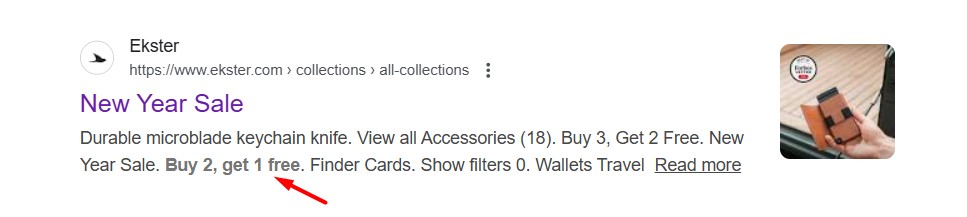
The Ekster Example: Ekster, known for smart wallets and accessories, utilizes a specific apparel marketing strategy called the B2GO (Buy 2, Get 1) offer.
Instead of slashing prices on a single item, they incentivize bulk purchasing. Their onsite messaging is clear: “Buy any 2 items, get a free cash clip.”
The Psychology of “Free”: The word “Free” is significantly more powerful than the word “Discount.” Mathematically, giving away a low-cost accessory (like a cash clip) might cost the brand the same as a 15% discount on the cart. However, the perceived value to the customer is much higher. They feel they are winning a physical gift.
Implementation for Your Store: Look at your accessories or basics—socks, belts, caps. These are high-margin, low-cost items. Use them as leverage. Configure your store to automatically unlock these gifts when the cart hits a specific threshold or item count. This is one of the most reliable apparel marketing examples for boosting Average Order Value without eroding your premium positioning.
3. The “Anti-Popup” Strategy: The Onsite Notification Feed
We have to admit the elephant in the room: everyone hates intrusive popups. While they work, they can degrade the user experience, especially for luxury brands where aesthetics are everything.
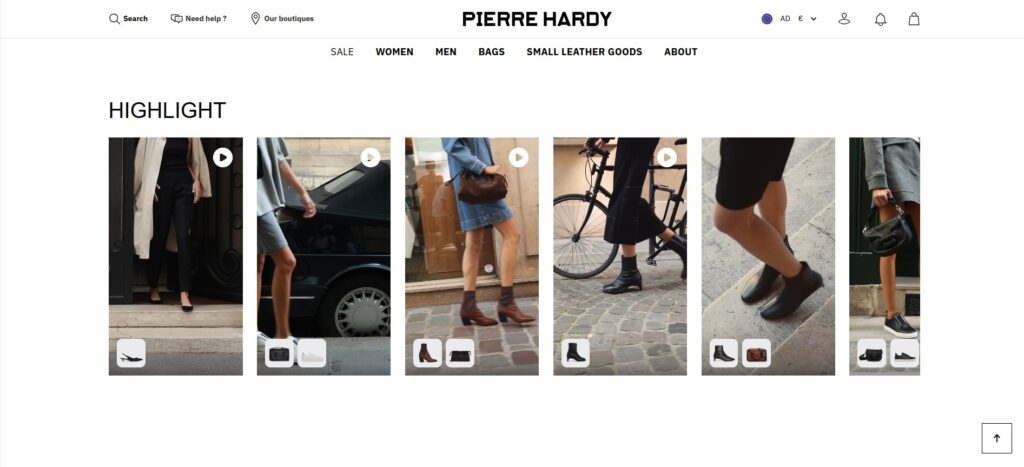
The Pierre Hardy Solution: Pierre Hardy, a luxury designer, faced a dilemma. They needed to announce new collections and drops, but they couldn’t plaster their homepage with aggressive banners that ruined the brand’s clean design.
Their solution was an “Onsite Feed.” Think of this like a social media notification center, but for your website. It sits quietly in the header or corner of the site. When clicked, it opens a stream of updates, new arrivals, back-in-stock alerts, and editorial content.
The Results: This non-intrusive approach achieved an impressive 11.6% Click-Through Rate (CTR). Because users chose to open the feed, their intent was higher. Even more impressively, Pierre Hardy achieved 22% revenue attribution through this channel.
Why You Should Try It: If you feel that aggressive popups are “cheapening” your brand, an onsite feed is the sophisticated alternative. It respects the user’s browsing experience while still providing a dedicated channel for your marketing messages.
4. Gamification: The “Spin-to-Win” Acquisition
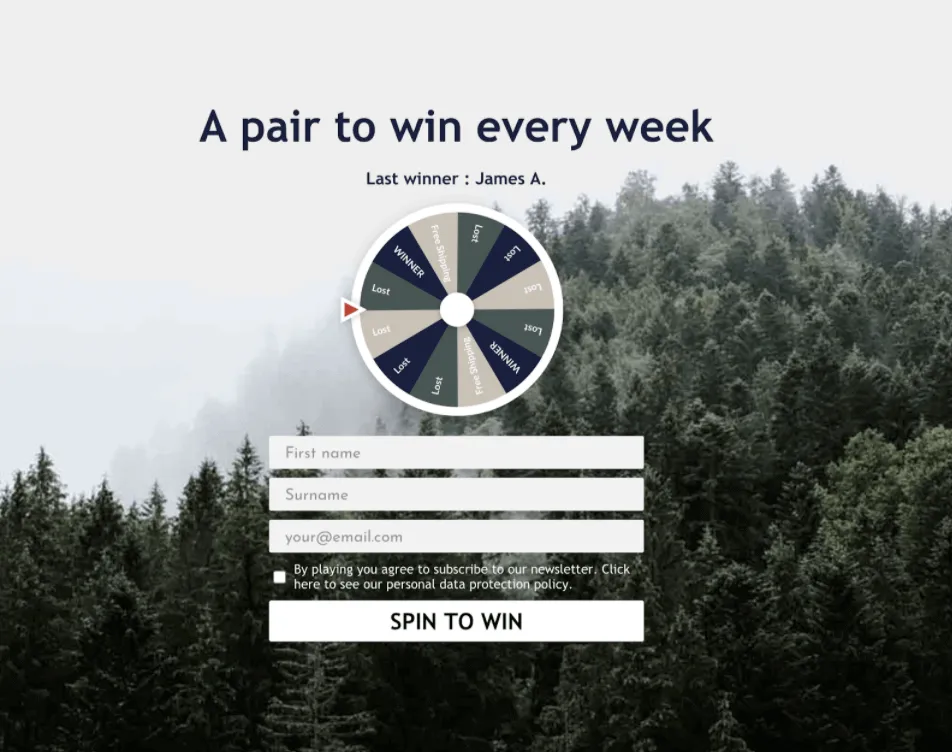
If your brand is more mass-market or energetic, you can afford to be louder. In the battle for email leads, standard forms are boring. Gamification taps into the dopamine centers of the brain.
The Faguo Case Study: Faguo, a sustainable fashion brand, needed a way to aggressively grow their email list. They didn’t just ask for emails; they turned the sign-up process into a game.
They implemented a “Spin-to-Win” wheel popup. The premise was simple: Enter your email to spin the wheel for a chance to win a pair of their best-selling sneakers.
Why It Works:
- The Prize: They didn’t give away an iPad. They gave away their own product. This ensures that every lead captured actually likes the brand’s aesthetic.
- The Action: Clicking a button to “spin” feels like a micro-win. It is less friction than “submitting” a form.
The strategy was so successful that Faguo now runs these product giveaways monthly. The data shows that full-screen popups like this can increase email capture by an average of 48%. If you are looking for high-velocity apparel marketing ideas, gamification is a proven winner.
5. Visual Discovery: “Shop the Look” Recommendations
Fashion is inherently visual. Sometimes a customer likes a “vibe” but not the specific item they clicked on. If you don’t offer an alternative immediately, they bounce.
Fashionnova’s “Similar Styles” Engine: Fashionnova is a juggernaut in the industry, and part of their success comes from their relentless focus on product discovery. When a user lands on a product page, they aren’t just shown that one item. They are immediately presented with “Similar Styles” and related options.
The Tech Behind It: This isn’t just manual tagging. It relies on using browsing history and visual AI to understand what the customer is looking for. If they are looking at a red sequin dress, showing them a blue hoodie is useless. Showing them three other red evening gowns keeps them in the funnel.
The Strategic Value: This reduces “decision fatigue.” By offering curated alternatives right on the product page, you keep the user browsing. It acts as a digital safety net, catching traffic that would otherwise leave because the first item wasn’t quite right. Implementing this can significantly increase the “Time on Site” and pages per session metrics.
6. The “Mission” Moat: Selling Sustainability
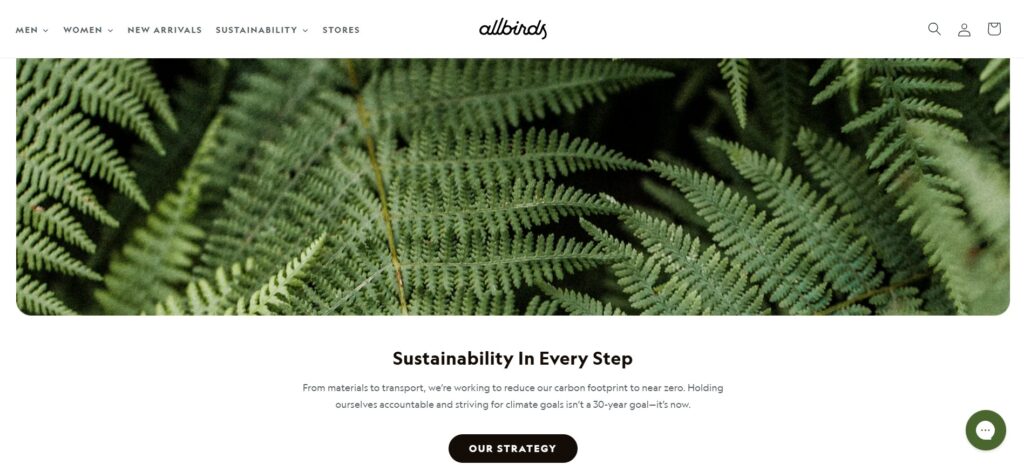
In 2026, a great product is table stakes. To build a brand that lasts, you need a mission. This is especially true if you are targeting Gen Z, who heavily vet the ethics of the brands they support.
Allbirds and Gymshark: Transparency as Marketing Both Allbirds and Gymshark have mastered the art of integrating their values into their sales funnel. They don’t hide their sustainability reports in a dusty PDF at the bottom of the site. They feature them as core content.
Allbirds, for instance, dedicates high-traffic pages to explaining their carbon footprint and material sourcing. Gymshark highlights their community projects.
The Economic Impact: This might seem like “fluff,” but it is a hard-nosed apparel marketing strategy.
- Differentiation: It separates you from the fast-fashion giants.
- Justification: It helps justify a higher price point. Customers are willing to pay a premium for “guilt-free” consumption.
- Retention: It builds a tribe. People leave brands, but they rarely leave communities that align with their personal values.
7. Behavioral Intercepts: The “Cart Rescue” Tactics
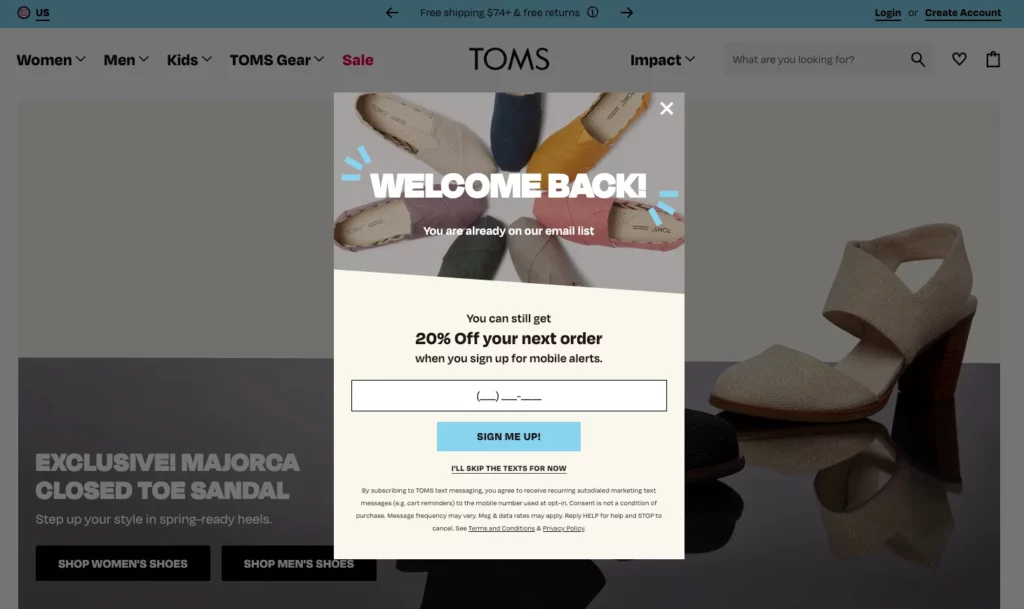
The vast majority of your traffic will leave without buying. The difference between a profitable month and a failing one often comes down to how much of that “lost” traffic you can save.
TOMS and Black Ember: Contextual Triggers Generic messaging is invisible. To catch a user’s attention, the message must be relevant to what they just did.
TOMS Shoes uses a “Welcome Back” strategy. If a visitor browsed, left, and then returned days later, TOMS triggers a specific message acknowledging their return, often with a small incentive to complete the purchase. It feels personal, like a shop assistant recognizing a regular.
Black Ember targets the “Almost There” shoppers. If a user adds an item to the cart but is $10 short of the free shipping threshold, they trigger a notification explicitly stating: “Add $10 more to get Free Shipping.”
The Data: These small, behavior-based nudges are powerful. They rely on “Revenue Attribution”—proving that a specific popup led to a sale. By targeting users based on cart value or return visits, you are spending your “discount budget” only on the people who are most likely to convert, rather than blasting coupons to everyone.
Also read our article on Ecommerce Product Recommendation Popup: Types, Use, and Benefits
Summary: Building Your Growth Engine
The common thread across all these apparel marketing examples is that they are not passive. Asphalte doesn’t wait for trends; they create them with surveys. Ekster doesn’t wait for large orders; they engineer them with B2GO offers. Pierre Hardy doesn’t wait for users to find news; they serve it in a feed.
To win in the apparel market this year, you need to stop viewing your website as a digital catalog and start viewing it as a conversion engine. Whether it is through gamified giveaways or sustainability storytelling, the goal is to create multiple “hooks” that catch different types of customers at different stages of their journey.
Pick one of these apparel marketing ideas this week. Test it. Measure the incremental revenue. Then layer on the next one. That is how you build a fashion empire in 2026.
FAQs
Q: What are the most effective apparel marketing strategies for 2026?
A: The most effective strategies currently involve “co-creation” models like pre-order surveys, gamified lead generation (spin-to-win), and volume-based incentives like Buy-2-Get-1 offers. These tactics prioritize engagement and higher order values over simple traffic generation.
Q: How can I generate leads for my clothing brand without ads?
A: You can use product surveys as a lead magnet. By asking visitors to vote on future designs or fabrics (like the brand Asphalte does), you collect high-quality emails from people genuinely interested in buying the final product.
Q: Does sustainability marketing actually drive sales?
A: Yes. Modern consumers, especially younger demographics, use sustainability as a key decision filter. Brands that transparently promote their ethical manufacturing (like Allbirds) see higher customer loyalty and can often command higher price points.
Q: What is an onsite feed and why should I use it?
A: An onsite feed is a notification center on your website that shares news and products without interrupting the user. It is highly effective for luxury brands that want to maintain a clean aesthetic while achieving high click-through rates on new collection drops.
Q: How can I increase my Average Order Value (AOV) in fashion?
A: Implementing behavioral triggers, such as “free shipping threshold” notifications or “Buy 2 Get 1 Free” offers, encourages customers to add more items to their cart to unlock a reward, directly lifting your AOV.